Washington DC: Local Impact
Hunger Statistics in Washington D.C.:

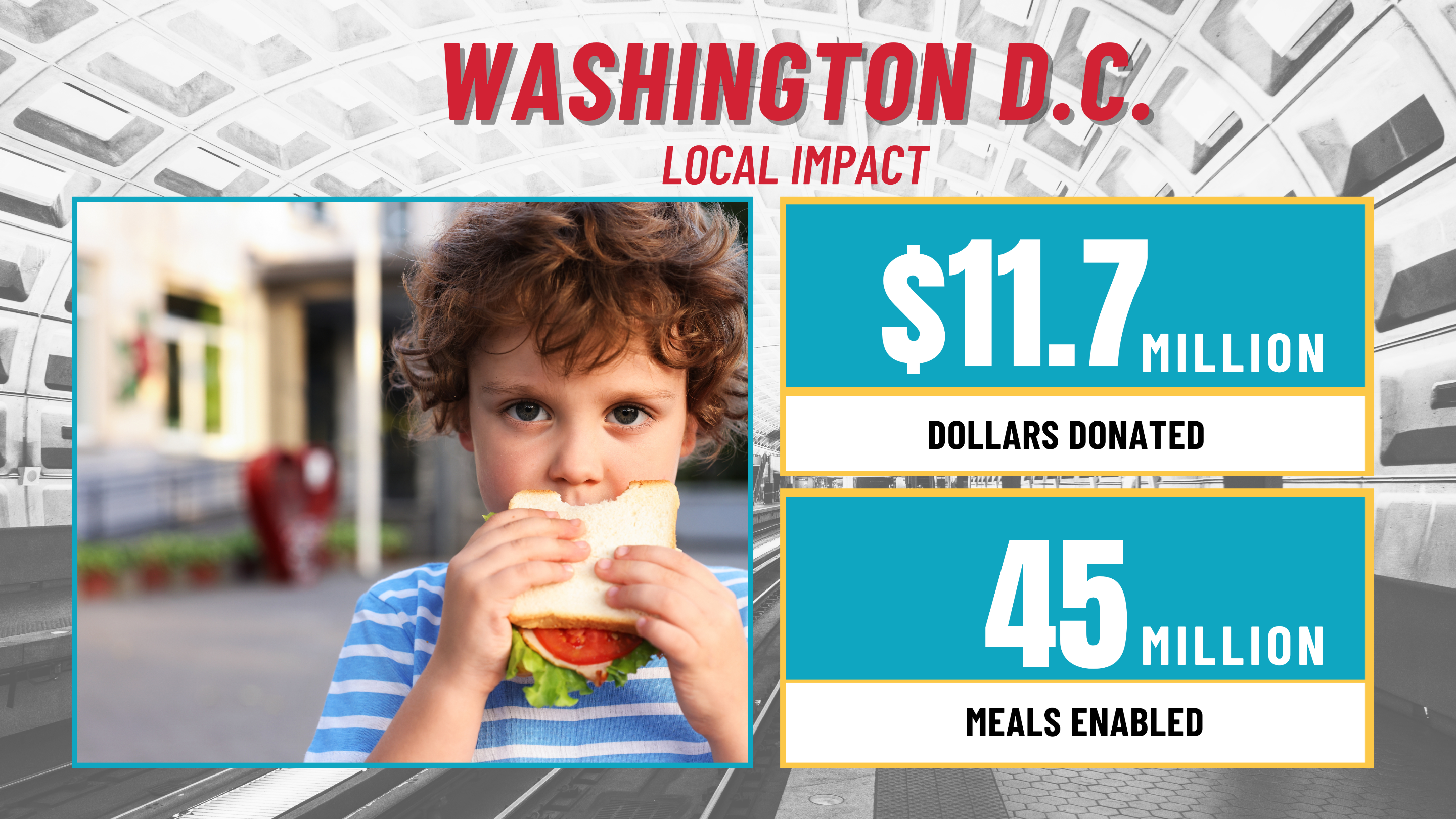
According to this latest data, 12.4% of District residents—about one in eight people—experienced food insecurity, while 14.7% of children lacked reliable access to enough food. (Feeding America’s Map the Meal Gap 2025, based on 2023 estimates.)
That child food insecurity rate represents an estimated 19,377 District kids (14.7% of the 2023 child population)—enough to nearly fill Audi Field (20,000 seats).

About 83,960 people across the District of Columbia face hunger. This challenge affects communities across the city.
Many households experiencing food insecurity earn too much to qualify for federal nutrition programs and instead rely on local food assistance organizations and partner agencies to meet basic food needs.
DC Central Kitchen
For residents of Washington View, a low‑income community of more than 2,500 people with limited access to transportation and grocery options, Stanton Supermarket is more than a corner store—it’s a lifeline. Through Nourishing Neighbors funding of the Healthy Corners program, we helped support a major transformation of this long‑time community partner, expanding access to fresh, affordable food in a USDA‑designated low‑income, low‑food‑access area. With technical guidance from the Healthy Corners team and grant support for key equipment—paired with the storeowner’s own investment—Stanton Supermarket significantly expanded its produce offerings, upgraded refrigeration and freezers, improved lighting and signage, and added shelving to better serve neighborhood needs.
This investment reflects a broader approach to food access that builds capacity, trust, and long‑term sustainability. By supporting Healthy Corners as both a mission‑driven wholesaler and a provider of infrastructure and technical assistance, our funding helps corner stores successfully stock and sell fresh, local produce while offering SNAP nutrition incentives. As demand for healthy food continues to grow, Stanton Supermarket is now equipped to meet it—strengthening local food access today and helping create a healthier, more resilient community for the future.