Delaware: Local Impact
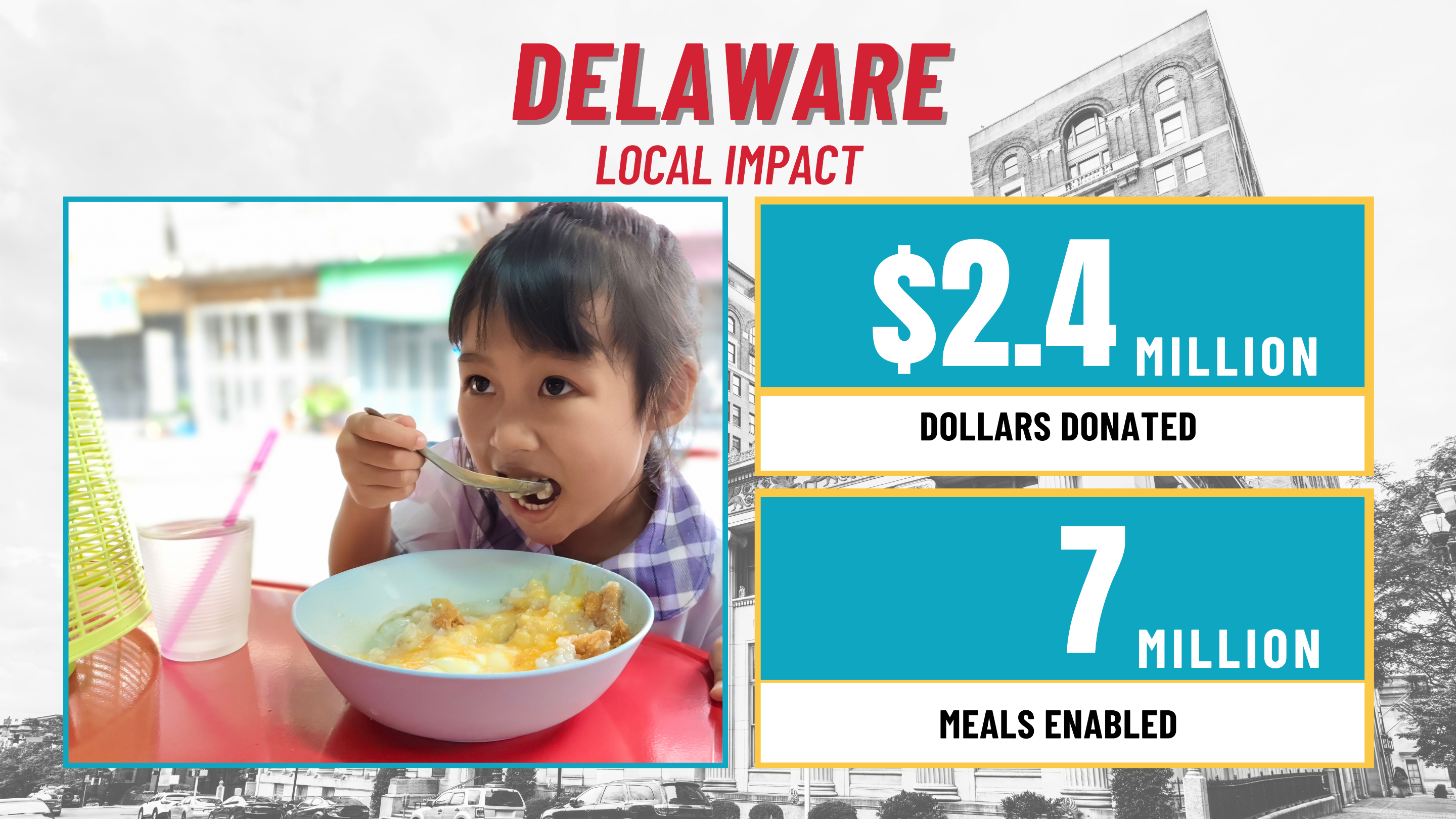
Hunger Statistics in Delaware:
According to this latest data from from Feeding America’s Map the Meal Gap, 13.0% of Delawareans—about one in eight people—experienced food insecurity, while 17.9% of children lacked reliable access to enough food. (Feeding America’s Map the Meal Gap 2025, based on 2023 estimates.)

That child food insecurity rate represents an estimated 38,481 Delaware kids (17.9% of the 2023 child population)—enough to fill Delaware Stadium in Newark (18,500 seats) more than twice.

About 134,320 people across Delaware face hunger. This challenge exists in every county, affecting urban, suburban, and rural communities alike.
Many households experiencing food insecurity earn too much to qualify for federal nutrition programs and instead rely on Delaware food banks and their network of local partner agencies to meet basic food needs.
Partner Stories
Food Bank of Delaware
In Newark—and across New Castle, Kent, and Sussex counties—veterans, active military, and their families balance service with the rising cost of groceries and health care. Nourishing Neighbors supports the Food Bank of Delaware’s Mobile Produce Prescription Program by bringing fresh food and care to the places neighbors already are.
Our $50,000 grant powers eight mobile pantry events serving 75–125 households each. The program distributes an estimated 60,000 lbs of food and 800 produce boxes (10–20 lbs each) to 800 food-insecure military-connected households—making fruits and vegetables easier to access, week after week.
At the same stops, mobile healthcare partners offer co-located services, linking nutrition support with critical medical care. This one-visit approach reduces common barriers like transportation and time off, and it helps families connect to resources beyond the pantry line.
Across Delaware, the initiative reaches about 2,000 veterans, service members, and family members. Partners track progress through households served, pounds of food distributed, and health outcomes reported by healthcare teams—so the support shows up in both fuller fridges and stronger health.