Maine: Local Impact
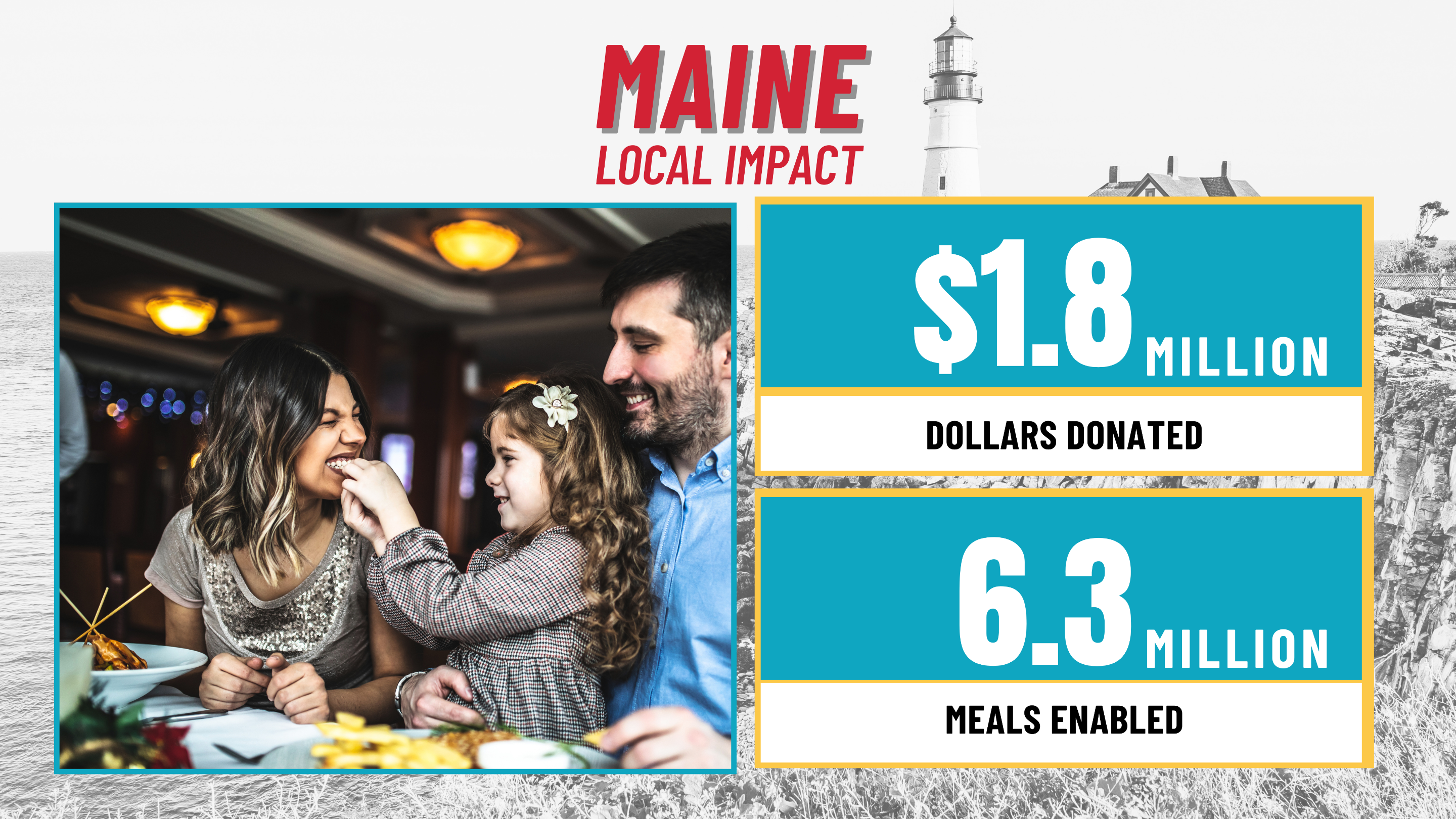
Hunger Statistics in Maine:
Hunger affects communities across Maine, touching people of all ages, backgrounds, and zip codes.

According to this latest data, 13.8% of Mainers—about one in seven people—experienced food insecurity, while 20.6% of children lacked reliable access to enough food. (Feeding America’s Map the Meal Gap 2025, based on 2023 estimates.)
That child food insecurity rate represents an estimated 49,666 Maine kids (20.6% of the 2023 child population)—enough to fill the Cross Insurance Arena in Portland (6,206 seats) about eight times.

About 191,920 people across Maine face hunger. This challenge exists in every county, affecting urban, suburban, and rural communities alike.
Many households experiencing food insecurity earn too much to qualify for federal nutrition programs and instead rely on Maine food banks and their network of local partner agencies to meet basic food needs.
Partner Stories
Preble Street
“[A meal] is so comforting. It's a feeling of home sweet home. There have been times when I've been hungry for so long and struggled for so long that I had a hard time digesting food... I know people that have gone without food so long that having a plate of food in front of them is just foreign. I'm thankful for it today, and I don't take it for granted. Hopefully anybody that does have a meal every day knows that that's truly a blessing in their life,” shares Andrew, a Preble Street Client.
Preble Street’s Food Security Hub is the heart and soul of Preble Street Food Programs, producing up to 2,000 meals every day and an average of 1,600 food box meals every month for people experiencing food insecurity and homelessness. The meals produced by the Food Security Hub feed people in Preble Street programs, like the Street Outreach Collaborative (SOC). Basic needs, including food, are a critical component of Preble Street’s mobile and street outreach conducted by the SOC. Meeting basic needs helps to build meaningful relationships with people, establishing trust to then connect them with the larger homeless services system. “We’re able to give people something, like food, warm gloves, or a pair of socks, without asking for anything in return. We build trust by meeting people’s basic needs,” says Bob Avery, a caseworker with the SOC.
Support from Albertson’s Companies Foundation makes this impact possible, thank you!
Good Shepherd Food Bank
Through our investment, we are helping trusted partners deliver consistent, meaningful food access to families who need it most. Our partnership with Good Shepherd Food Bank is moving thousands of pounds of fresh produce and staple foods into homes each month through both school‑based and community pantries—ensuring neighbors have reliable access to nutritious food close to home.
That support is making a tangible difference for children and families beyond the school day. Through the Backpack Program, 30 students each week head home with extra food for weekends and school breaks, bringing reassurance to their families and excitement to the kids themselves. Knowing there will be good food to eat builds security, reduces stress, and helps families get through the toughest gaps. Stories like these affirm why our funding matters: when food is consistent and dependable, communities are stronger and families can focus on what matters most.