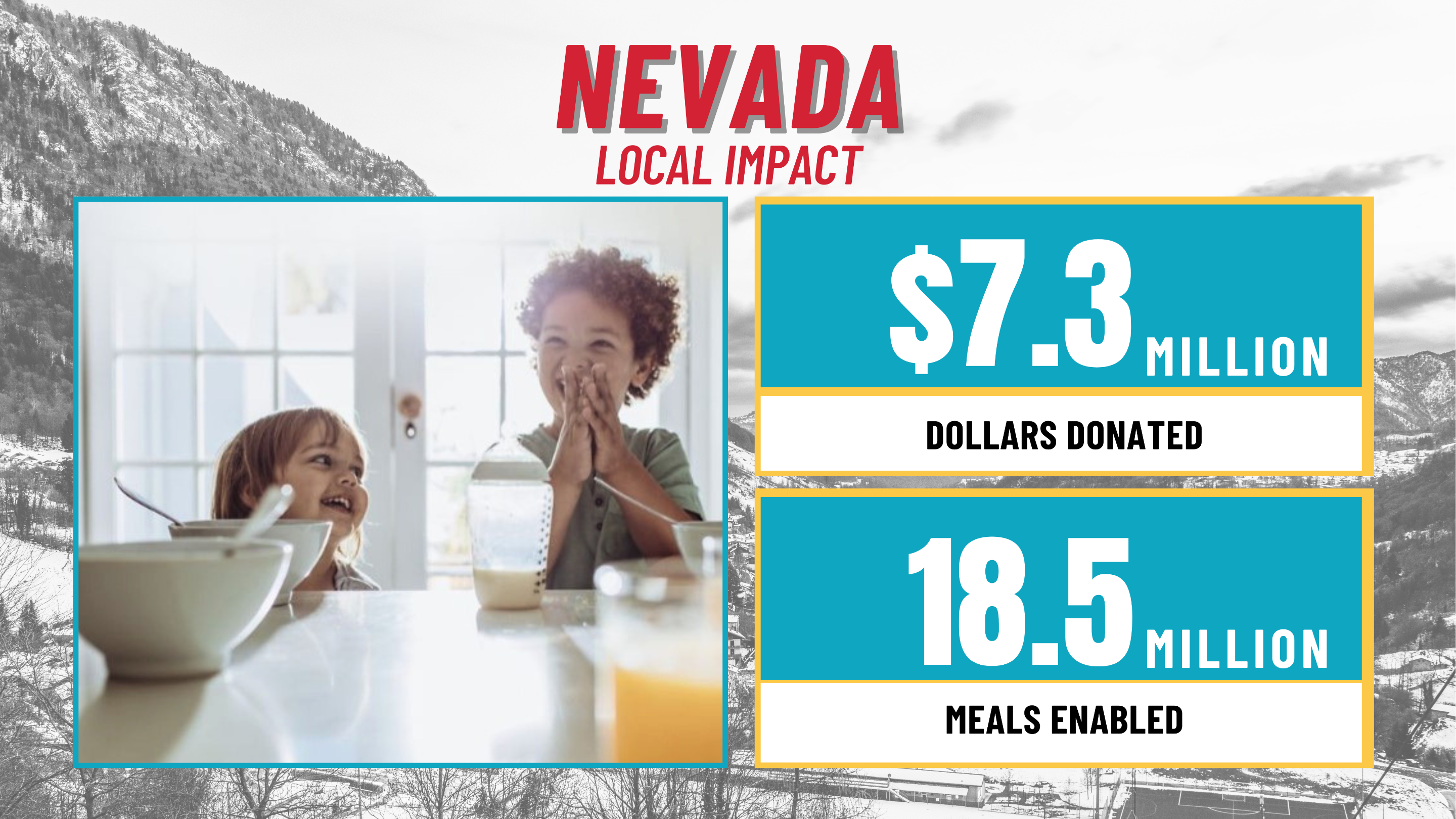
Nevada: Local Impact
Hunger Statistics in Nevada:
Hunger affects communities across Nevada, touching people of all ages, backgrounds, and zip codes.

According to this latest data, 15.1% of Nevadans—about one in seven people—experienced food insecurity, while 20.9% of children lacked reliable access to enough food. (Feeding America’s Map the Meal Gap 2025, based on 2023 estimates.)
That child food insecurity rate represents an estimated 179,410 Nevada kids (20.9% of the 2023 child population)—enough to fill Allegiant Stadium (65,000 seats) nearly three times.

About 481,460 people across Nevada face hunger. This challenge exists in every county, affecting urban, suburban, and rural communities alike.
Many households experiencing food insecurity earn too much to qualify for federal nutrition programs and instead rely on Nevada food banks and their network of local partner agencies to meet basic food needs.
Partner Stories
Three Square Food Bank
Through our investment in Three Square Food Bank’s Benefit Services Outreach (BSO) program, we are strengthening the systems that help families move from crisis to stability. By supporting the implementation of a Client Relationship Management (CRM) system, Three Square’s BSO Advocates can more efficiently connect neighbors across Southern Nevada to the Supplemental Nutrition Assistance Program (SNAP) and critical wraparound services—reducing delays, eliminating barriers, and improving the overall client experience.
Building on last year’s CRM funding, this grant enhances Three Square’s ability to serve more households with greater accuracy and care. The system allows advocates to better track interactions, streamline SNAP enrollment, and ensure families receive the full range of resources they are eligible for. From seniors and children to low‑income households in both urban and rural communities, neighbors facing food insecurity can now connect more quickly and seamlessly to the support they need.
This investment goes beyond short‑term assistance. By improving efficiency and coordination, the BSO program helps families secure reliable benefits and services that support long‑term food and financial stability—ensuring that no neighbor is left navigating complex systems alone.