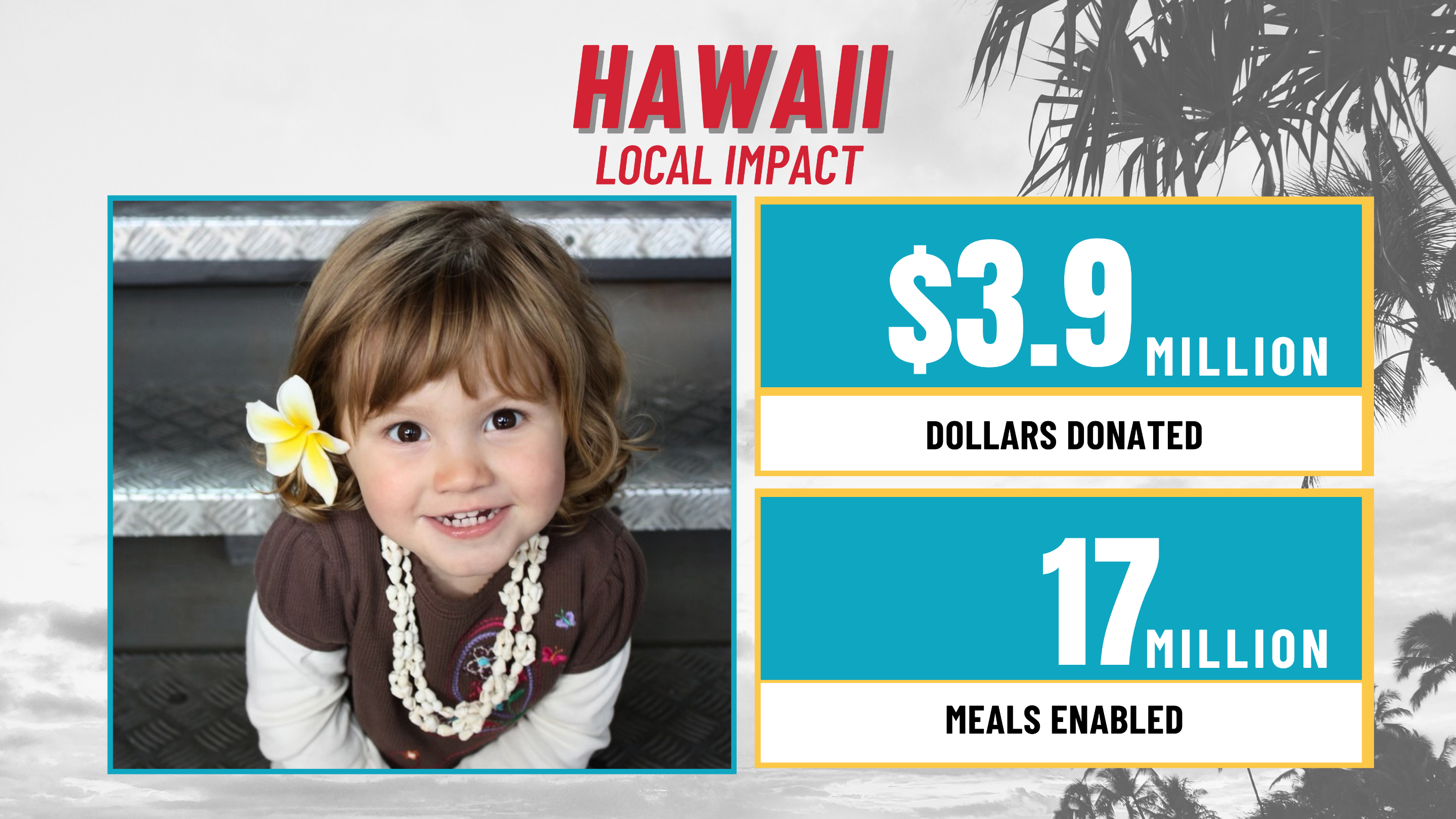
Hawaii: Local Impact
Hunger Statistics in Hawaii:

According to this latest data, 14.2% of Hawaii residents—about one in seven people—experienced food insecurity, while 20.7% of children lacked reliable access to enough food. (Feeding America’s Map the Meal Gap 2025, based on 2023 estimates.)
That child food insecurity rate represents an estimated 58,194 Hawaii kids (20.7% of the 2023 child population)—enough to fill Aloha Stadium (50,000 seats).

About 203,220 people across Hawaii face hunger. This challenge exists in every county, affecting communities statewide.
Many households experiencing food insecurity earn too much to qualify for federal nutrition programs and instead rely on Hawaii food banks and their network of local partner agencies to meet basic food needs.
Hawai'i Appleseed
In Hawaiʻi, too many families are forced to make impossible choices just to put food on the table. Through our continued partnership with Hawaiʻi Appleseed, Nourishing Neighbors is helping advance long‑term solutions that make nutrition assistance work better for the people who rely on it most. Our funding supports efforts to expand Double Up Food Bucks to seniors and families with children who have been left behind by recent eligibility changes, while also advocating for SNAP benefits that more accurately reflect the real cost of food in Hawaiʻi and for tax policies that allow families to stretch their grocery dollars further.
This investment fuels a coordinated, equity‑centered approach to systems change—one that combines grassroots leadership, policy advocacy, research, and strategic communications to remove barriers to food access statewide. By strengthening enrollment, increasing benefit adequacy, and expanding incentives that reward healthy food choices, our support helps ensure that SNAP reaches more households quickly and effectively. Together with Hawaiʻi Appleseed, we are proud to invest in solutions that not only address immediate food insecurity, but also reshape the systems that determine whether Hawaiʻi residents can consistently afford the nourishment they need to thrive.