New Jersey: Local Impact
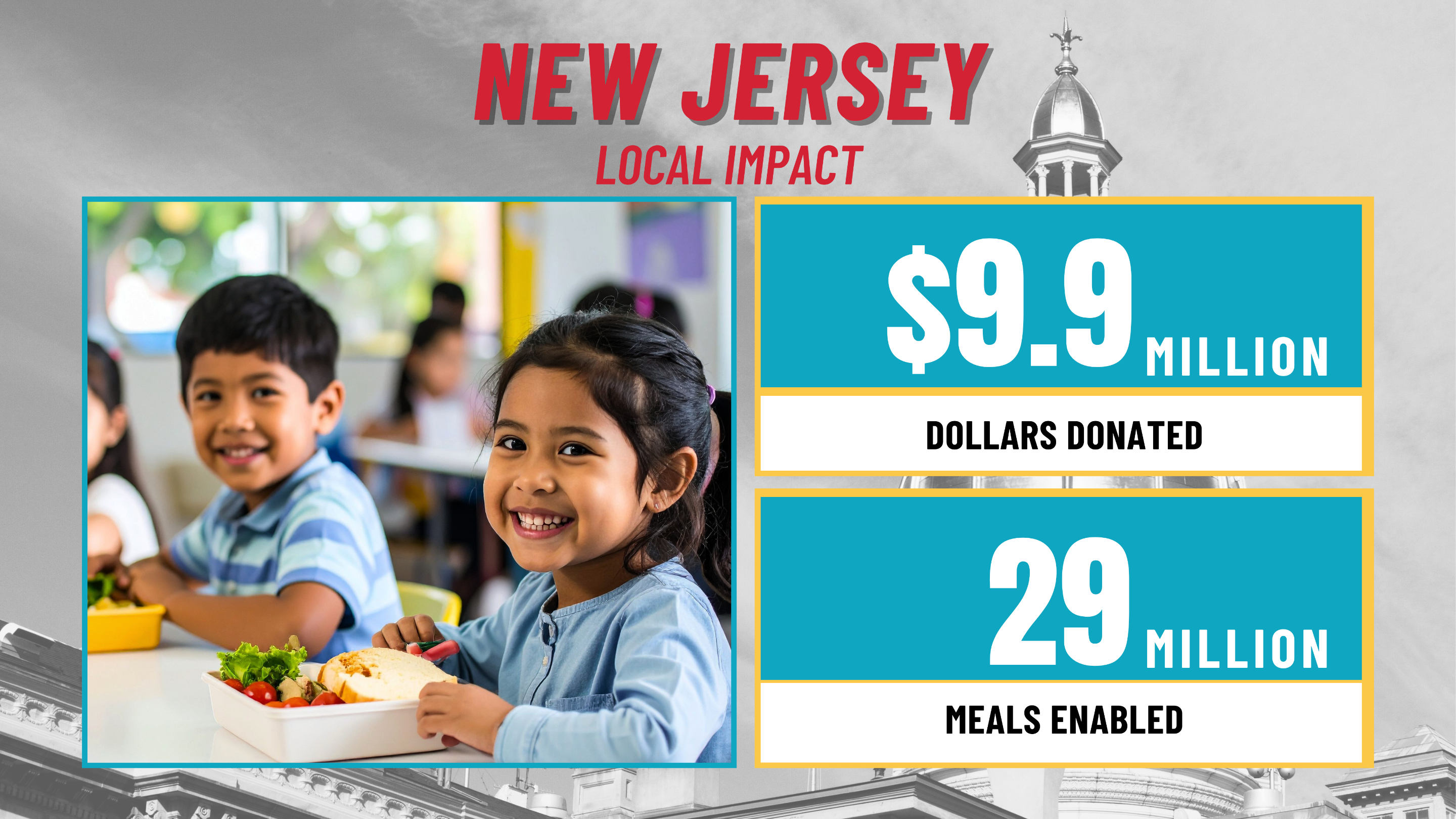
Hunger affects communities across New Jersey, touching people of all ages, backgrounds, and zip codes. The most recent data from Feeding America’s Map the Meal Gap—released in 2025 and based on 2023 estimates—offers a clearer picture of how hunger impacts local communities.
According to this latest data, 11.7% of New Jersey residents—about one in nine people—experienced food insecurity, while 13.5% of children lacked reliable access to enough food. (Feeding America’s Map the Meal Gap 2025, based on 2023 estimates.)
That child food insecurity rate represents an estimated 283,148 New Jersey kids (13.5% of the 2023 child population)—enough to fill MetLife Stadium (82,500 seats) more than three times.

About 1,089,190 people across New Jersey face hunger. This challenge exists in every county, affecting urban, suburban, and rural communities alike.
Many households experiencing food insecurity earn too much to qualify for federal nutrition programs and instead rely on New Jersey food banks and their network of local partner agencies to meet basic food needs.
Partner Stories
Community Food Bank of New Jersey
For Cafunna, a junior at Stockton University’s Atlantic City campus, thinking about the future isn’t just about big dreams—it’s about the everyday choices that make those dreams possible.
“A growing number of students like me must choose between purchasing a textbook or buying groceries for the week, making our next tuition payment or going to class on a full stomach,” she shared. “These decisions make the difference between us walking across the stage at graduation with a degree or not.”
A commuter student from Somers Point, Cafunna lives with her parents and is majoring in health science, with plans to one day become a nurse practitioner—following in her mother’s footsteps. Between classes, an on‑campus job in the Dean of Students’ office, and her involvement in a sorority, her days are long and full.
She first learned about Stockton’s on‑campus food pantry through her job and initially assumed it was only for students living on campus. “When I first went there with a friend, I was surprised that it was actually for both residential and commuter students,” she said. “It was a very good experience.”
Today, the Community Food Bank of New Jersey pantry, in part supported by Nourishing Neighbors, has become part of her routine, helping her get through long days when buying food on campus simply isn’t an option. “If I didn’t have the pantry, I wouldn’t have money to buy food here on campus,” Cafunna explained.
More than food, the pantry offers a sense of welcome and hope. “The pantry is very welcoming. It’s exciting to go there,” she added. “Thanks to the pantry, the future looks a little brighter than before for students who need it.”