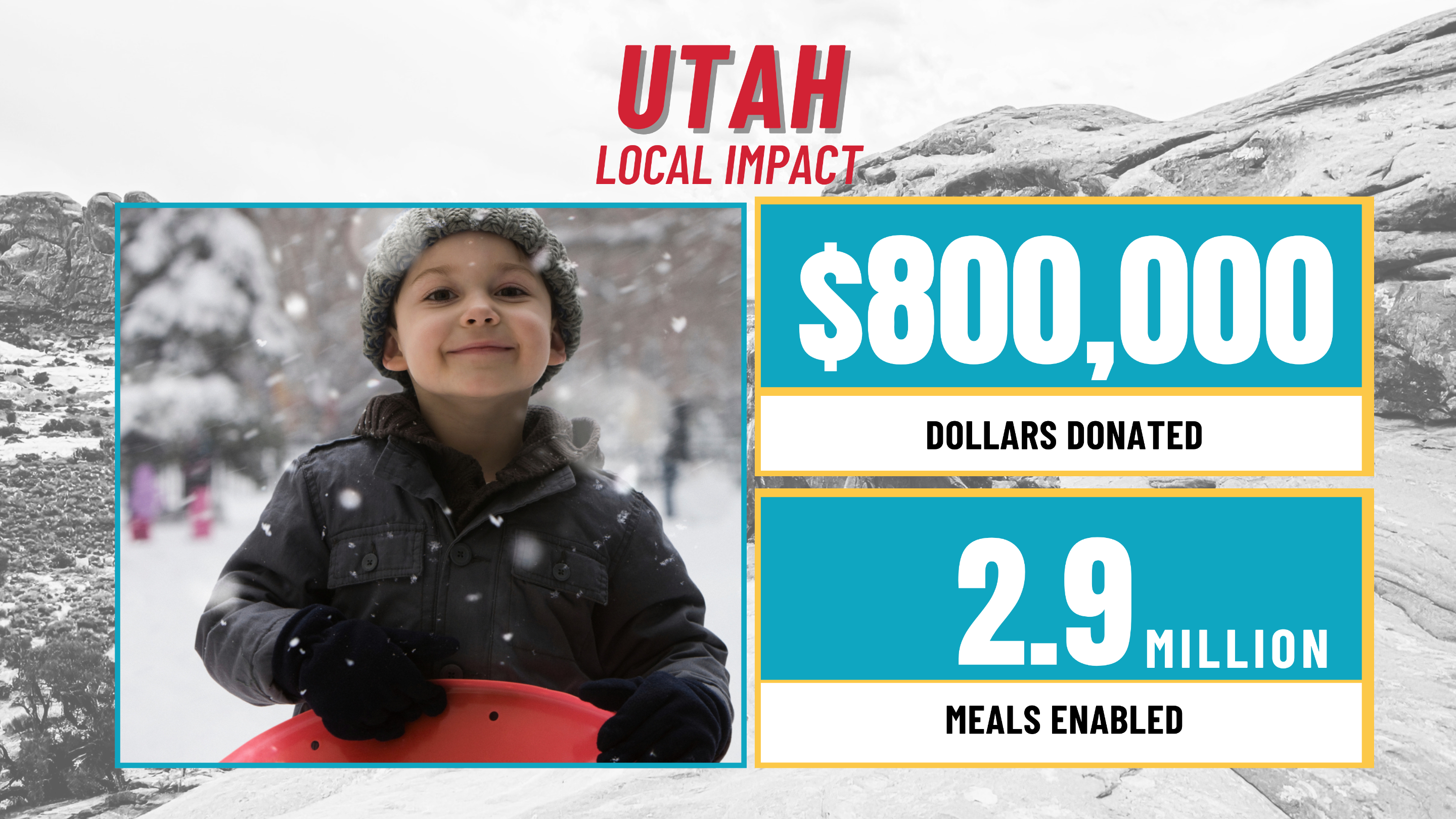
Utah: Local Impact
Hunger Statistics in Utah:
Hunger affects communities across Utah, touching people of all ages, backgrounds, and zip codes.

According to this latest data, 14.2% of Utahns—about one in seven people—experienced food insecurity, while 17.2% of children lacked reliable access to enough food. (Feeding America’s Map the Meal Gap 2025, based on 2023 estimates.)
That child food insecurity rate represents an estimated 220,709 Utah kids (17.2% of the 2023 child population)—enough to fill Rice–Eccles Stadium in Salt Lake City (51,444 seats) about four times.

About 484,090 people across Utah face hunger. This challenge exists in every county, affecting urban, suburban, and rural communities alike.
Many households experiencing food insecurity earn too much to qualify for federal nutrition programs and instead rely on Utah food banks and their network of local partner agencies to meet basic food needs.
Partner Stories
Utah Food Bank
Through Nourishing Neighbors, our partnership with Utah Food Bank helps ensure children have consistent access to nutritious meals when school is out—an essential lifeline for students who rely on school meals during the day. By supporting meals for kids at 81 school and community sites, Utah Food Bank is filling the critical gap that exists during after‑school hours, providing balanced, nourishing food that helps children stay healthy, focused, and ready to learn.
These meals do more than address hunger. Served in safe, trusted spaces, they also create stability and connection for families navigating food insecurity. By investing in programs that reach children where they already are, our funding helps ensure that thousands of Utah kids receive the nutrition they need—supporting not just their next meal, but their growth, well‑being, and future success.